
Top 10 Best Blended Whiskeys in Delhi around ₹1500 and less – A Buying Guide

What makes a blended whisky worth knowing about?
The answer begins with understanding how different spirit components come together and how their combination shapes the finished product. For anyone exploring the best premium blended whisky in Jaipur, knowing a little about blending can make comparing different options more meaningful.
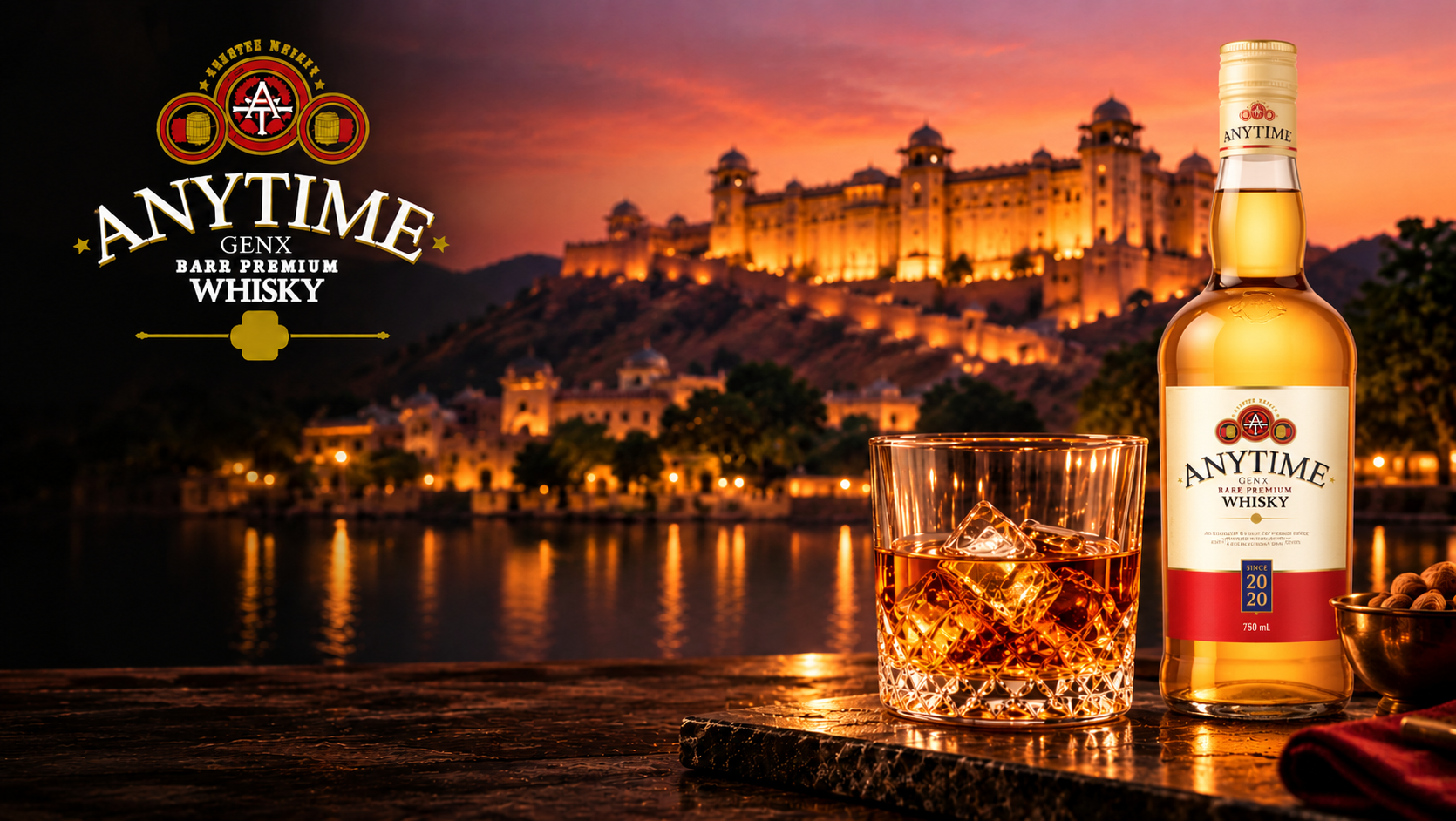
At Anytime Whisky, a brand from Rajasthan Liquors Limited, our blend brings together premium Scotch malts and selected Indian grain spirits. This combination places Anytime Whisky within India’s diverse whisky landscape, where blending plays an important role in creating different styles. In this guide, we look at what blended whisky means, what to consider when comparing products and how to understand the details on a whisky label.
Blended whisky brings together different whisky components or permitted spirits to create a particular style. Depending on the formulation, these components can differ in their grain composition, production methods and maturation.
Blending is not simply about combining spirits at random. The components contribute different characteristics to the finished product, influencing its overall aroma, flavour and finish. Their proportions and individual qualities help define the resulting blend.
This is why two blended whiskies can be quite different even when they belong to the same broad category. One product may be described in terms of malt or cereal notes, while another may have published descriptions referring to fruit, spice or wood. The exact character depends on the product itself, so it is important not to assume that every blend will have the same profile.
Single malt whisky is made at one distillery using malted barley and pot stills. Blended whisky combines different components according to its formulation and product category.
The distinction lies in the production approach, not in a simple ranking of quality. A single malt can reflect the character associated with one distillery, while a blend brings different components together to achieve an intended overall profile.
Neither category is automatically superior. Understanding how a whisky is made, what its label states and what product information is available offers a more useful starting point than choosing based on the category name alone.
The term premium is often used to describe a product’s market positioning. It does not, by itself, confirm the whisky’s age, composition or quality. When comparing a premium blended whisky, it helps to look beyond the name and consider the information available about the product.
The components used in a blend are an important part of understanding its identity. Where a brand publishes details about its ingredients, production methods or maturation, this information can help explain how its product differs from others.
At Anytime Whisky, the blend brings together premium Scotch malts and selected Indian grain spirits. These components are central to the brand’s product description. To learn more about the brand’s background, read about the Anytime Whisky journey.
Flavour notes help communicate a whisky’s style. Depending on the product, descriptions may refer to malt, cereal, fruit, spice, caramel or wood.
Such descriptions should be based on reliable product information or credible tasting assessments. Broad terms such as “smooth” or “rich” can mean different things to different people, so specific and substantiated descriptions are more informative.
When comparing products, check whether the brand provides clear information about the whisky’s character rather than relying entirely on general marketing language.
The finish refers to the sensations and flavours that remain after tasting. Balance describes how the different elements of a whisky work together.
These qualities can help distinguish one product from another, but they should not be inferred from price or packaging. Reliable tasting notes and verified product descriptions provide a better basis for understanding what a particular whisky offers.
The label is another useful source of information. Check the stated category, alcohol by volume (ABV), bottle size and manufacturer or bottler details. Any claims about age or maturation should be supported by appropriate documentation and comply with applicable requirements.
Clear product information helps readers make comparisons based on details that can be checked, rather than assumptions about what a brand name or premium label represents.
India has a diverse whisky market, with products that differ in their formulations, production approaches and market positioning. When researching premium whisky brands in India, it is useful to understand what each brand states about its products and how those products fit within the broader category.
Anytime Whisky, from Rajasthan Liquors Limited, brings together premium Scotch malts and selected Indian grain spirits. This blend forms part of the wider Indian whisky market, where different spirit components contribute to the formulation of the finished product.
For anyone researching the best whisky in Jaipur, understanding the product itself is a useful first step. Rather than relying only on general rankings, look at the published specifications, stated category and label details of the options being compared.
The same approach applies when considering Anytime Whisky. Its documented composition provides a starting point for understanding the blend, while the product’s available specifications offer further context. Any additional claims about flavour, maturation or production should be based on verified product information.
For more context on the relationship between Indian whisky and Scotch malt, read our article on Indian Scotch whisky.
The range of Indian whisky brands includes products with different formulations and production approaches. Some may emphasise particular ingredients or styles, while others are positioned around their own blend specifications.
When comparing blended whisky brands in India, assess each product individually. Look at its stated category, available composition details, manufacturer information and any published production claims. Avoid assuming that all Indian whiskies share the same ingredients or flavour characteristics.
If you’re exploring the category in more detail, our guide to blended whisky in Rajasthan offers additional context for readers comparing whisky options in the state.
Scotch whisky and Indian whisky also operate within different geographical and regulatory frameworks. Scotch whisky must meet the applicable requirements for production and maturation in Scotland, while Indian products must comply with relevant Indian standards. A product’s documented specifications are more useful than its country of origin alone.
Price and availability may also influence a search for blended whisky in Jaipur. However, online listings do not always reflect current retail conditions, and prices can vary according to the product, bottle size, applicable taxes and state excise requirements.
Before relying on a published price, check the exact product variant, bottle volume, location and date associated with the listing. Comparing bottles of equivalent sizes also makes price differences easier to understand.
Retail availability can change, so a product mentioned online should not automatically be assumed to be in stock at a particular shop. Contact authorised local retailers to confirm current details.
For Anytime Whisky, published brand information can help readers understand the offering, but local retail prices and availability should be verified separately. This distinction is particularly important when researching a specific product in Jaipur.
A whisky label can answer several practical questions and help you understand what a product states about itself. Before comparing bottles, check the following details.
These details will not tell you everything about a whisky, but they help you make comparisons using information that can be verified.
FAQs
Blended whisky combines different whisky components or permitted spirits to create a particular style. Its formulation varies by product and applicable regulations. The components contribute to the character of the finished blend, so checking the stated category and available product specifications is a useful first step when comparing options.
Single malt whisky is made at one distillery using malted barley and pot stills. Blended whisky combines different components according to its formulation and category. The production approaches differ, but neither category is automatically superior. Individual product specifications are more informative than category labels alone.
Consider the documented composition, available flavour descriptions, production and maturation information, alcohol content, bottle size and manufacturer details. Check age-related claims against reliable product information. Price can help you compare options within a budget, but it does not independently establish quality.
They can differ in their ingredients, production methods, maturation practices and applicable regulations. Scotch whisky must meet the relevant requirements for production and maturation in Scotland, while Indian whisky products are subject to applicable Indian standards. Comparing individual product specifications is more informative than making generalisations about either market.
Contact authorised local retailers and confirm the exact product variant, bottle size and current price. Online listings may be outdated or apply to another location. Brand information can help you understand a product, but local stock and retail prices should be verified separately.
Responsible drinking notice: Alcohol consumption is injurious to health. Do not drink and drive. This article provides general information about whisky categories and product labelling for adults of legal drinking age. It is not a recommendation to consume alcohol.